When designing electrical systems, it is crucial to design it to be electrical fault free. Electrical fault is an abnormal condition which can occur anytime. The following are the major causes of electrical faults in an electrical system:
- Loose connection
- Defective or inadequate insulation
- Intrusion of foreign object
- Faulty electrical wiring
- Defective Equipment
- All other causes
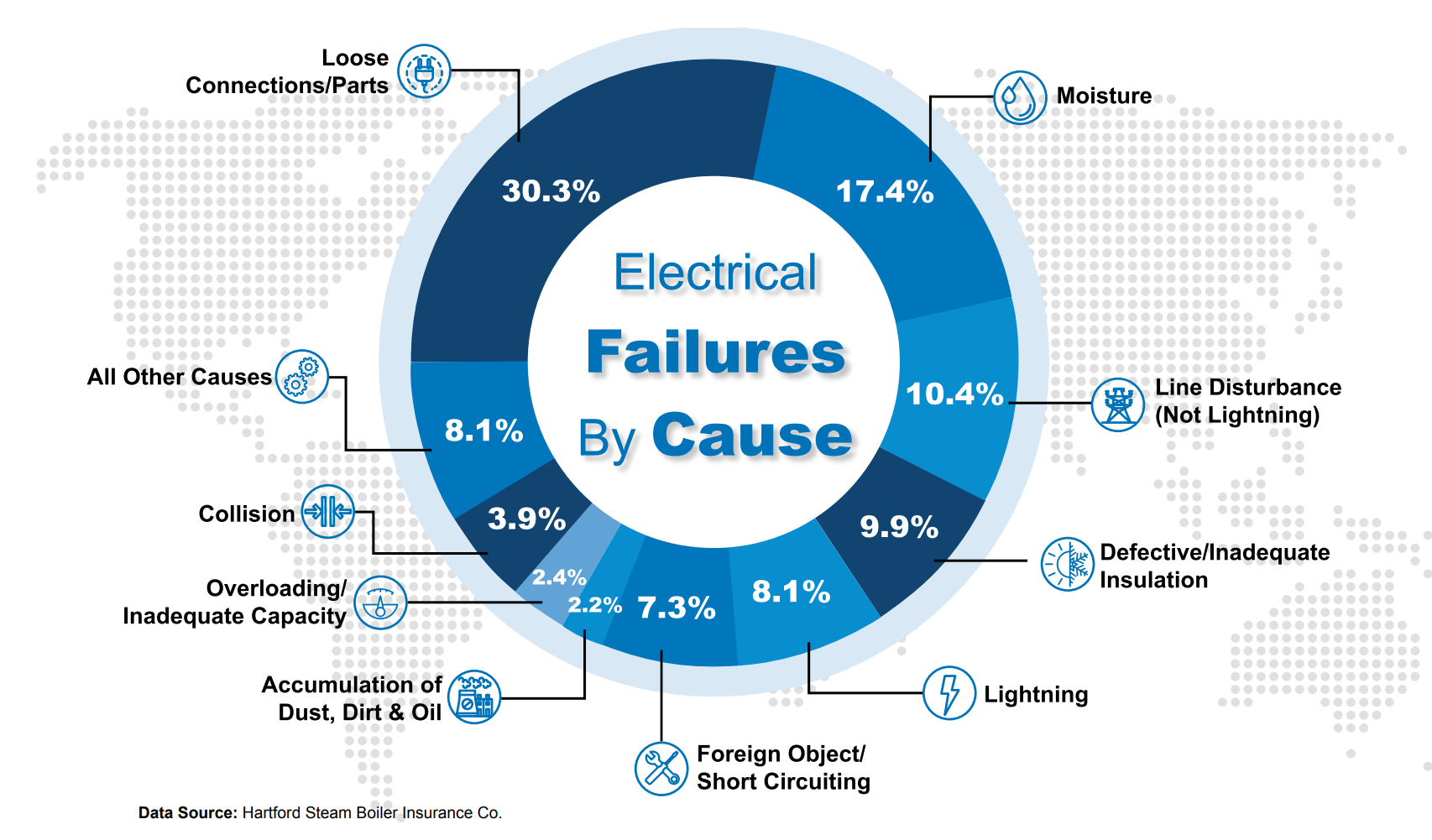
Sources of Faults
- Utility Power Supply
- Generators
- Synchronous Motors
- Induction Motors
Types of Faults
1. Single Line-to-Ground Fault
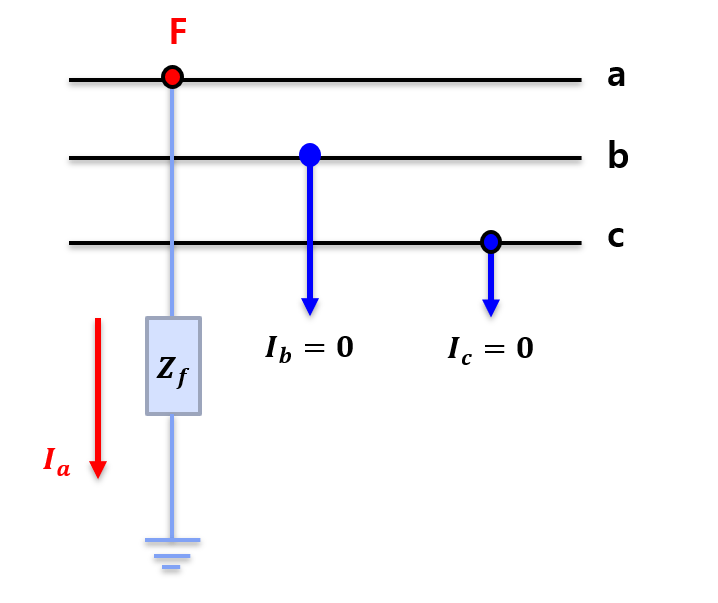
The figure on the left shows a Single Line-to-Ground fault on phase a through a fault impedance Zf .
Ib = 0
Ic = 0
Va = Ia Zf
The symmetrical components of fault currents are equal; therefore:

Fault current Ia is given by:

Where:
Ea = Pre-fault voltage of phase a at point F (per unit)
Z0 = Zero sequence impedance (per unit)
Z1 = Positive sequence impedance (per unit)
Z2 = Negative sequence impedance (per unit)
Zf = Phase impedance at the fault point (per unit)
2. Line-to-Line Fault
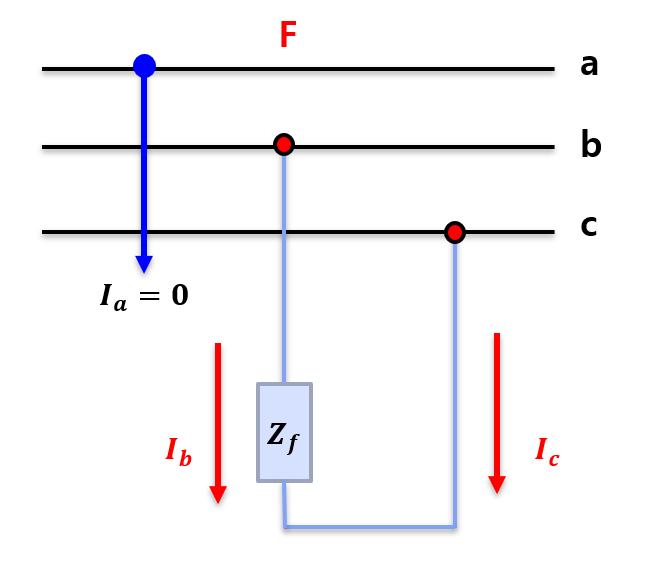
The figure on the left shows a Line-to-Line fault on phase b and phase c through a fault impedance Zf .
Ia = 0
Ic = -Ib
Ia0 = 0 Ia2 = -Ia1


Therefore;

Where:
Ea = Pre-fault voltage of phase a at point F (per unit)
Z1 = Positive sequence impedance (per unit)
Z2 = Negative sequence impedance (per unit)
Zf = Phase impedance at the fault point (per unit)
3. Double Line-to-Ground Fault
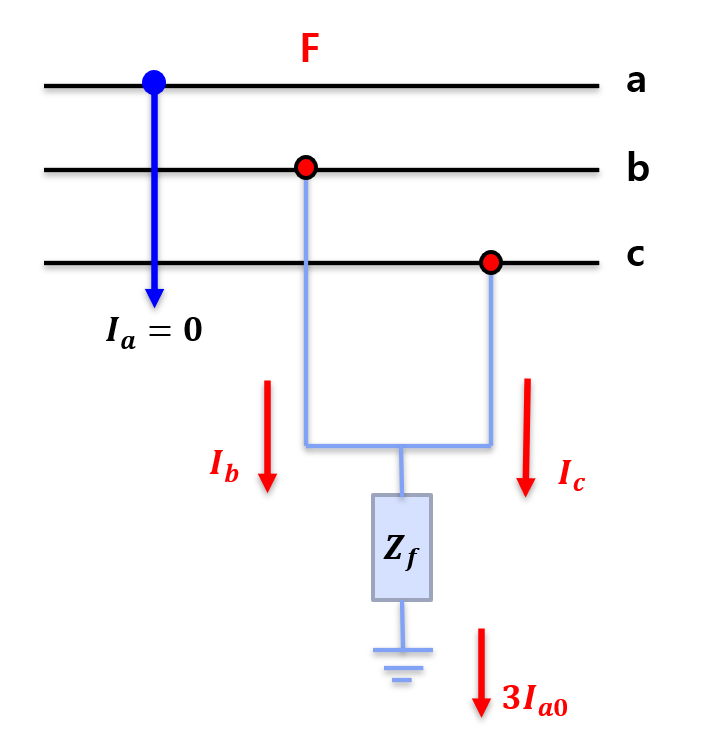
The figure on the left shows a Double Line-to-Ground fault on phase b and phase c through a fault impedance Zf .
Ia = 0
Ia1 + Ia2 + Ia0 = 0
Vb = Vc = 3 Zf Ia0




 Electrical Systems Design